
The Director’s Cut
You talk about your business.
I’ll guide you through the camera side.
An interview video for your business, directed by someone who’s spent 15 years on camera and on stage.
01
The usual way
Most videographers know the right angle.
Few have stood in front of it.
The camera goes up. Someone says “just be natural” and presses record.
Does this happen to you?
- “I’m not a camera person.” Hardly anyone is. A lens can’t nod or smile back, so talking to it feels like talking to a wall. So you don’t talk to it. You talk to me, and the cameras film our conversation.
- “Natural” suddenly feels impossible. Of course it does. You never think about how you breathe until someone mentions it. Being told to act natural works the same way. So I never ask you to be natural. We talk about your business, and the natural part takes care of itself.
- “I hate the sound of my voice.” Yes, most people do. You usually hear your voice through your own head, which makes it sound deeper. A recording is the first time you hear what everyone else hears. To everyone else, it just sounds like you. A proper microphone makes sure it sounds its best.

“None of that means you’re bad on camera. It means nobody has shown you how yet.
As a teenager, I was told I was tone deaf. Now I travel the world, singing professionally in front of thousands. Being on camera works the same way. It’s a skill you learn, not a gift you’re born with.”
- You already do this every day. You explain your business to customers and staff all the time. The camera is the only new part.
- Nobody is watching for mistakes. People watch your video to decide if they can trust you. A real conversation does that better than a perfect script.
02
Why me
I’ve been on both sides
of the camera.
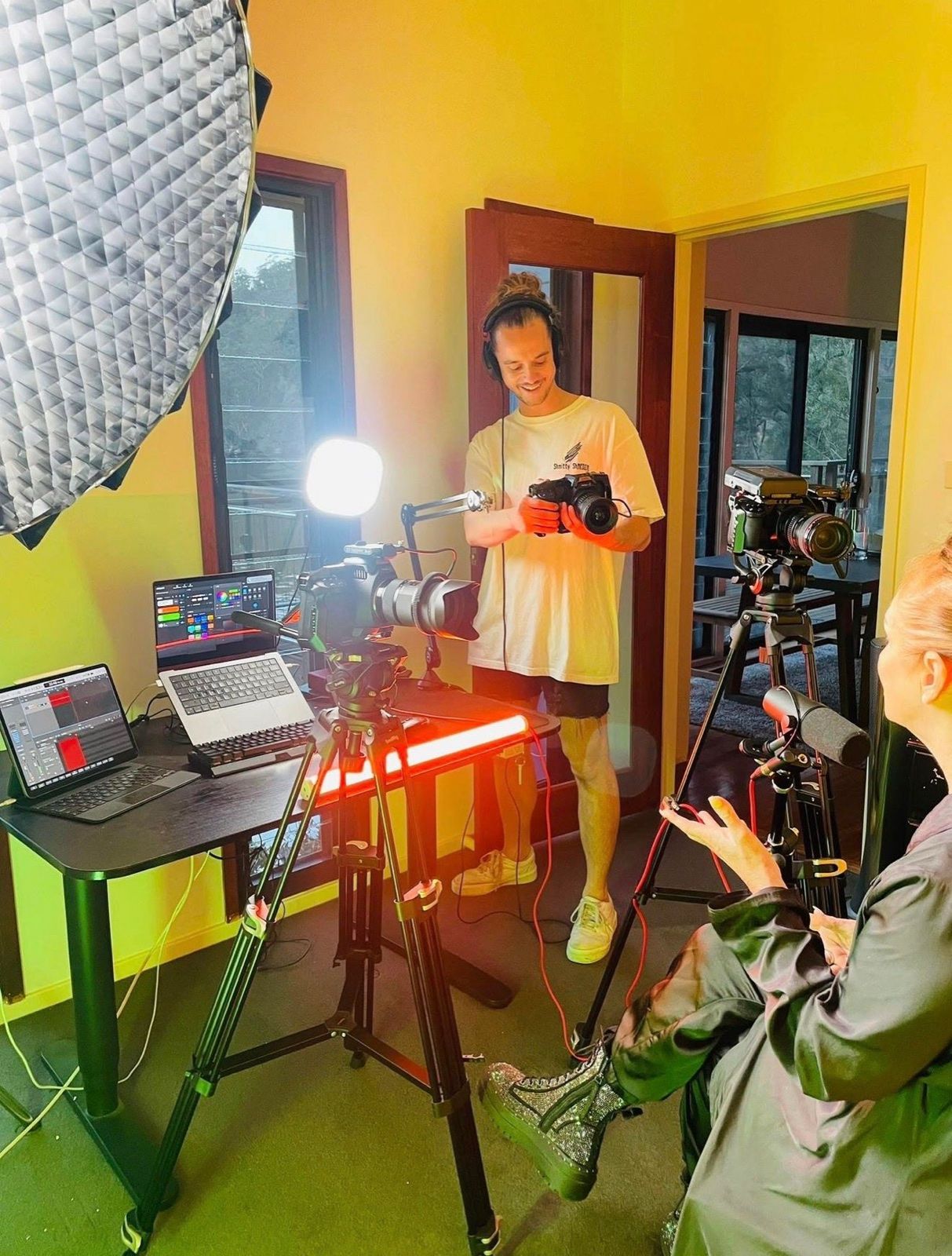
15+ years as a professional performer, on stage and on screen
Unless you’ve stood in front of hundreds of people, talking to a camera can feel awkward. Even weird, with a whole setup pointed at you.
Believe me, I’ve been there: on stage most nights of my life, for the past 15 years. As a stage and screen performer and presenter, I’ve turned what I’ve learnt into simple techniques anyone can use.
Stage and screen
-
 Presenter
Movie Scoop · Paramount
-
 West Side Story on Sydney Harbour · 2024
-
 Bernardo
West Side Story, Aus/NZ tour · 2021
-
 Singer and dancer
Production shows · Celebrity Cruises
-
 Singer
Production shows · Royal Caribbean
-
 Singer and dancer
Universal Studios Singapore
What I bring to your shoot
- Your voice I show you which word in each line carries the feeling, so you sound like you mean it.
- Your body Where your hands go and how to sit, so you look relaxed.
- Your eyeline I place the cameras so your eyes look natural in every shot.
- The right questions Simple ones about what you love, so the answers come easily.
- The cut I switch cameras on your key points, which also hides any stumbles.
- Your honest moments As your creative director, I review every take for the moments where your eyes show you mean what you’re saying. Those are the moments an audience connects with.

A
camera
reveals
the truth.
That’s
exactly
how
we
sell
your business.
A close up in an interview says a thousand words: every pause, every smile. Don’t let that put you off. A simple conversation about the right topic is enough to win people over, if it’s done properly.
03
The interview set-up
A Camera A
So with this particular client,
B Camera B cuts in on her key line
the main object was: he wanted a weekender and also looking to Airbnb, so I had to have his personal touch.
The switch to Camera B lands on her key point.
Not scripted. Her own words.
Two cameras, unrehearsed
Simple questions.
Clear answers.
I set up two cameras, a mic and soft light, then asked Jacqui simple questions about her job. No script. Just her answers.
The camera angle switches on the key points that need to be heard. It also hides stumbles over words and small mistakes.
Audio
Mic: Shure SM7B, just off camera
Sound waves Swap above and watch the music
Her voice Music Music before I balanced it
Jacqui, Riverlife Designs · Interior stylist
04
What is B-roll?
The interview tells people what you do. The B-roll shows them.
B-roll is the footage around your interview: your space, your work and the small details. It plays over your words, so people can see what you’re talking about.
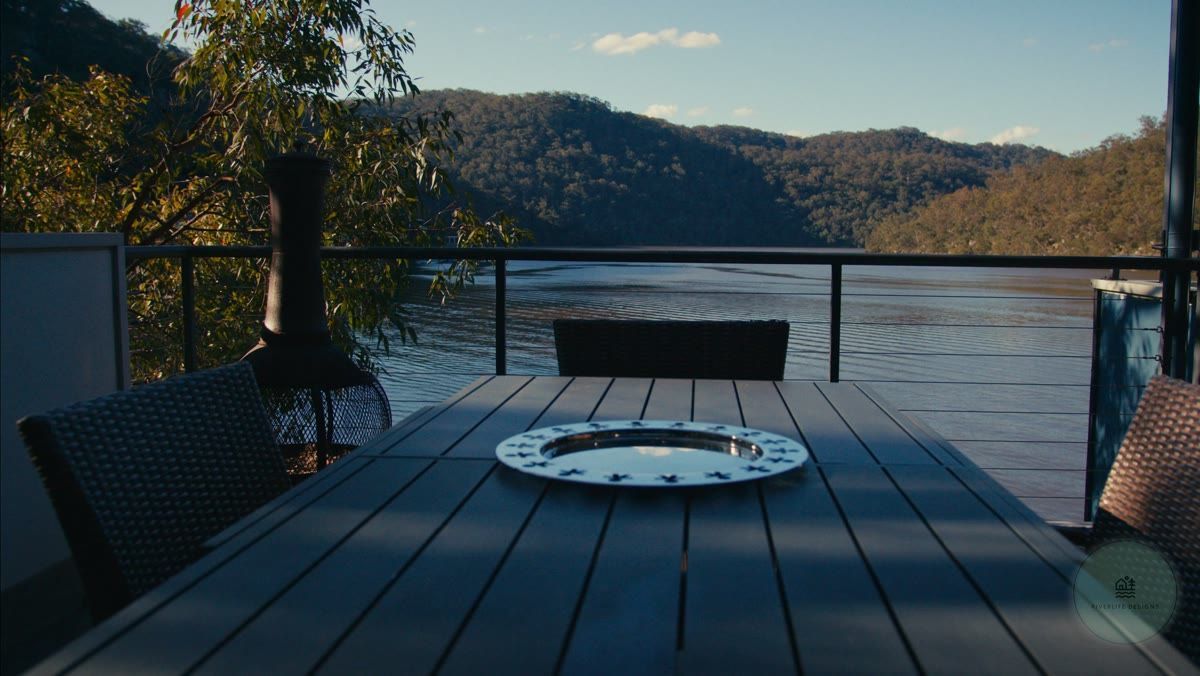 Your space
The rooms, the light and the view.
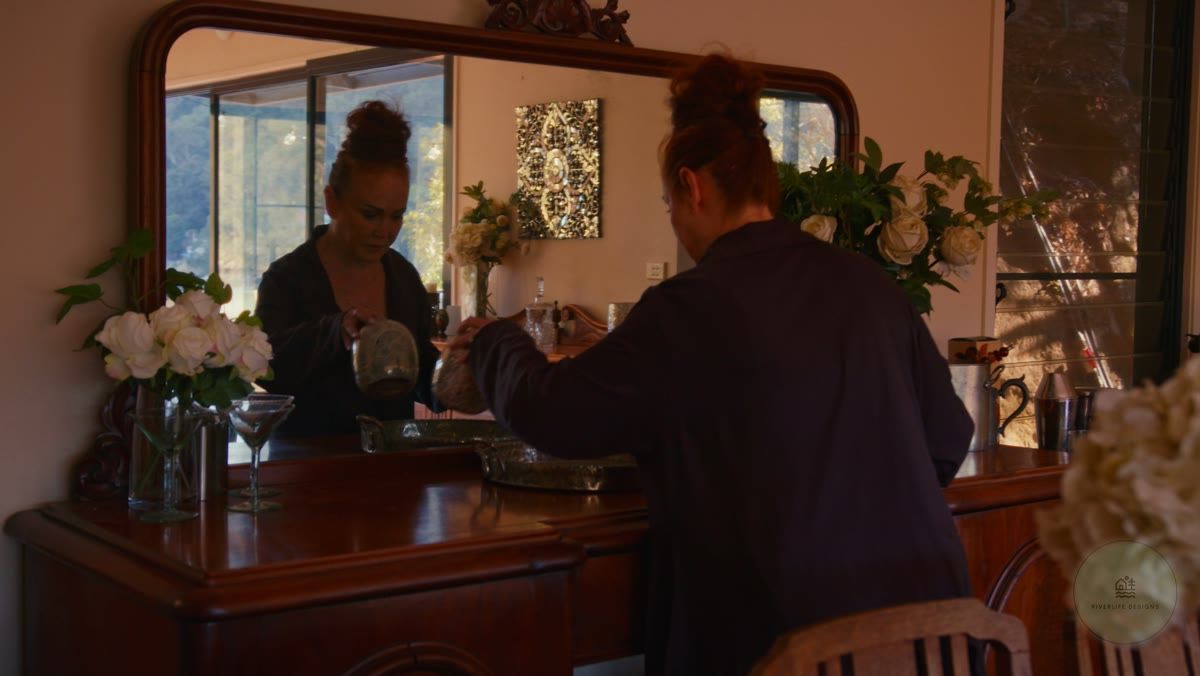 Your work
You doing the job you talk about.
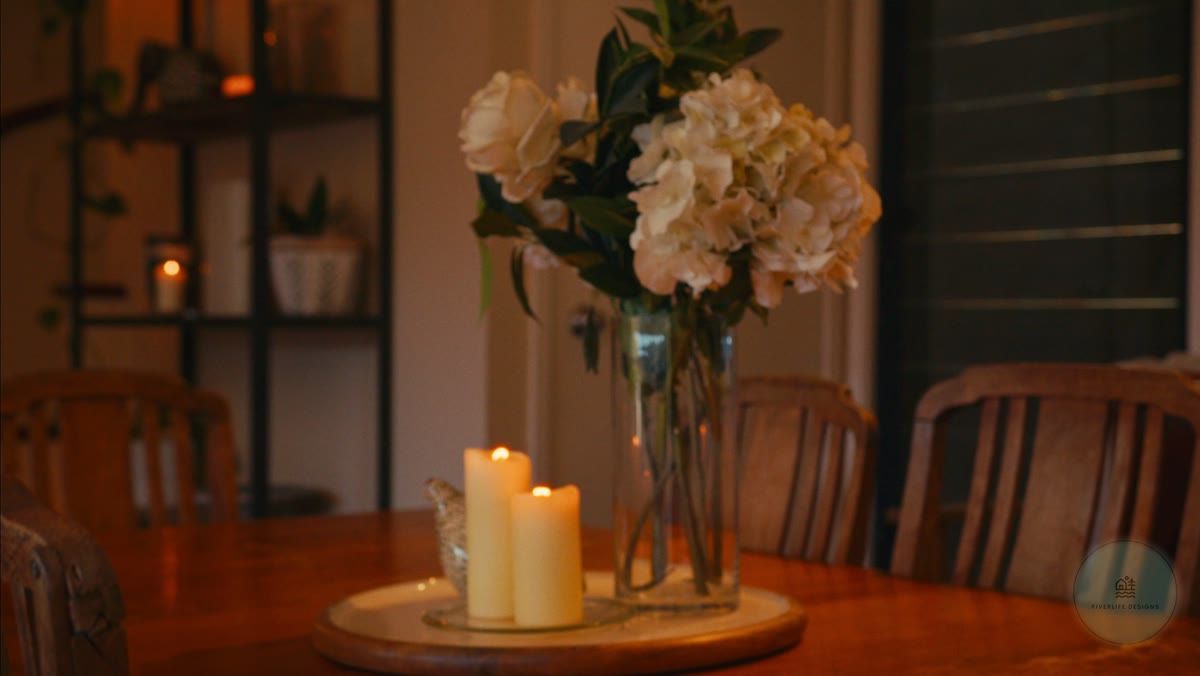 The details
The finishing touches customers notice.
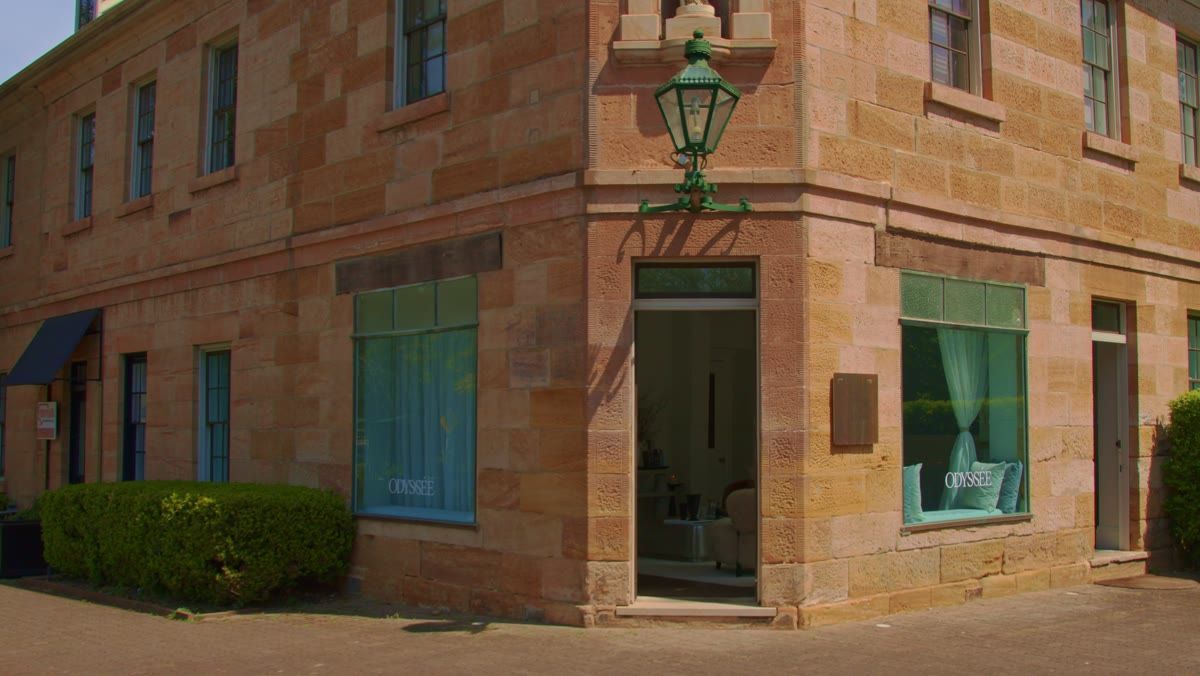 Your front door
What customers see when they arrive.
In the edit, I match each shot to what you’re saying. When you talk about your space, people see it.
Filmed for Riverlife Designs and Odyssée.
05
This package includes
Everything for one interview video.
Planned, filmed and edited.
- Planning discussion We discuss your business, your customers and what the video needs to do.
- 4 hour shoot Your workspace and your interview, filmed on the same day.
- 2 locations Your workspace, plus a quiet room nearby for the interview.
- On camera direction I direct your voice, posture and eyeline, so you come across relaxed and natural.
- A simple interview No script and no rehearsing. Just simple questions about your business.
- 2 cinematic 6K cameras Two angles, cut together on your key points.
- Shure SM7B studio mic Just off camera, for clear, full sound.
- Professionally edited and colour graded So it looks and feels like a short film.
- 1 finished video 2–3 minutes, wide (16:9). For your website, YouTube and socials.
- A 30–45 second vertical version The same video, cut down and reframed 9:16 for Reels, TikTok and Shorts.
- 3 vertical clips 30–60 seconds each, cut from several different moments of the shoot. For Reels, TikTok and Shorts.


06
How it runs
-
Planning discussion
We discuss your business and pick the topic and the questions.
-
Shoot day
Four hours. We start with the interview, so I understand your business. Then film your workspace and what a typical day looks like.
-
Edit
I cut between the two cameras on your key points, then colour grade it.
-
Your videos
Ready 3–7 days after the shoot: your finished video, its vertical version and your 3 vertical clips.
07
Questions
Do I need a script?
No. I ask you simple questions about your business and you answer in your own words. It sounds like you, because it is you.
What if I stumble or lose my words?
That’s normal. With two cameras I can cut to the other angle on your key points, which hides stumbles and small mistakes. It keeps your delivery natural, so you always sound confident.
Do I have to look into the camera?
No. You talk to me, sitting just beside the lens. It feels like a conversation, not a presentation.
I’ve never been on camera. Is that OK?
Most of my clients haven’t. That’s what the direction is for: simple techniques from 15 years on stage and screen.
What if I sound monotone?
That usually happens when the words aren’t connected to what you mean. The fix is simple. In every line, one word carries the feeling. In “I absolutely love my business”, most people would stress “absolutely”, but the word that matters is love It’s a feeling, and anyone watching can tell if you mean it. So in our planning discussion and on the day, we talk about what you value in your business. Once you’re connected to what you’re saying, the right words stand out on their own.
How is it different from Interview + Workspace?
The Director’s Cut adds on camera direction, a second 6K camera, the Shure SM7B studio mic and 3 vertical clips. Interview + Workspace is filmed on one camera with a DJI clip on mic. Both come with a 30–45 second vertical version.
Plan your video
Tell me about your business, and I’ll plan the shoot with you.
PLAN MY VIDEO →Working with a smaller budget?